Risso's dolphin (Grampus griseus (Cuvier, 1812)) | ||
|
Identification:
The Risso’s dolphin is a large dolphin with a robust, stocky body
that becomes more slender behind the dorsal fin. Its head is bulbous,
with no beak, a particularly large melon, and a mouth that slants
upwards towards the eyes. A peculiar, deep V-shaped crease extends
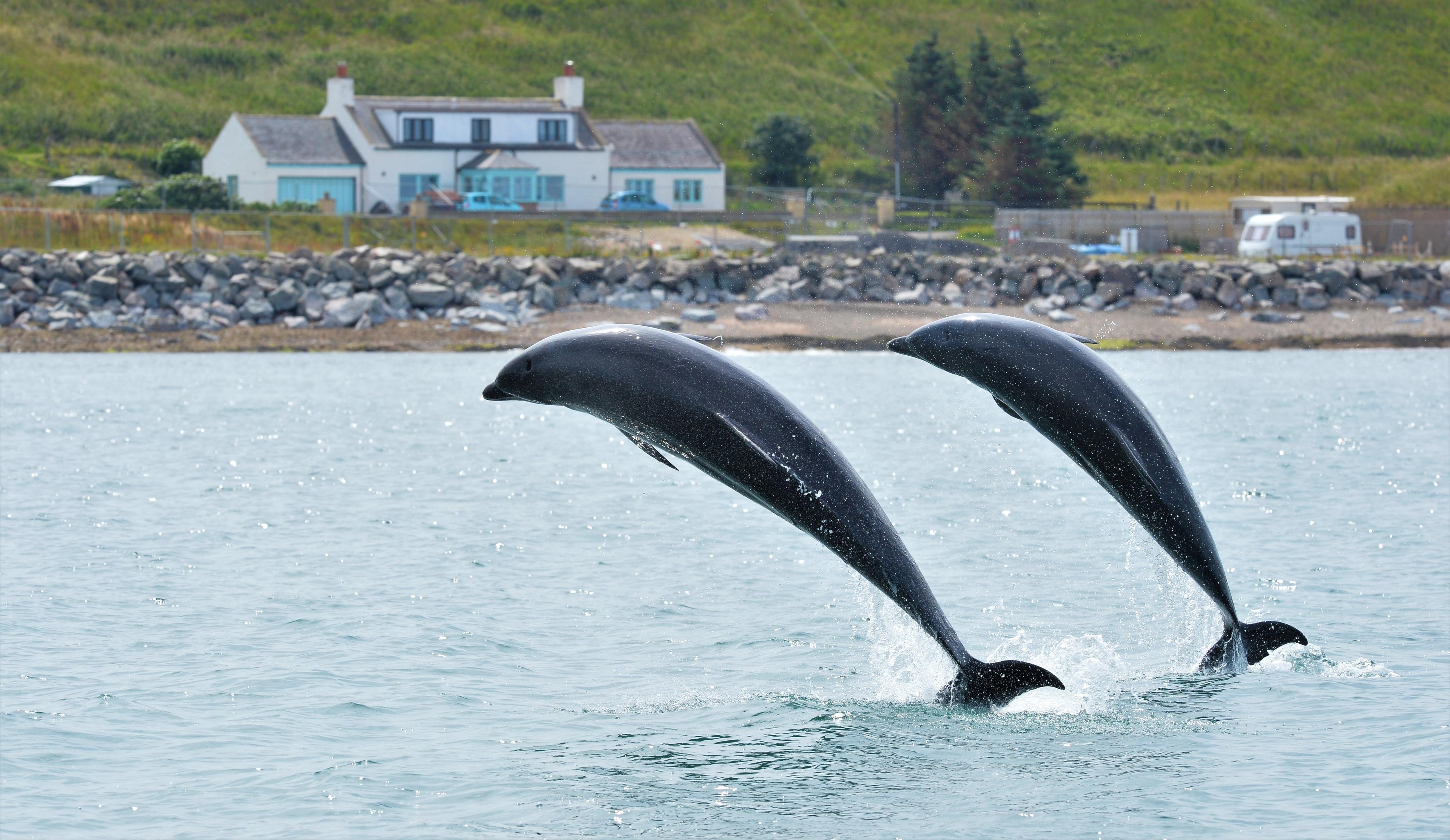
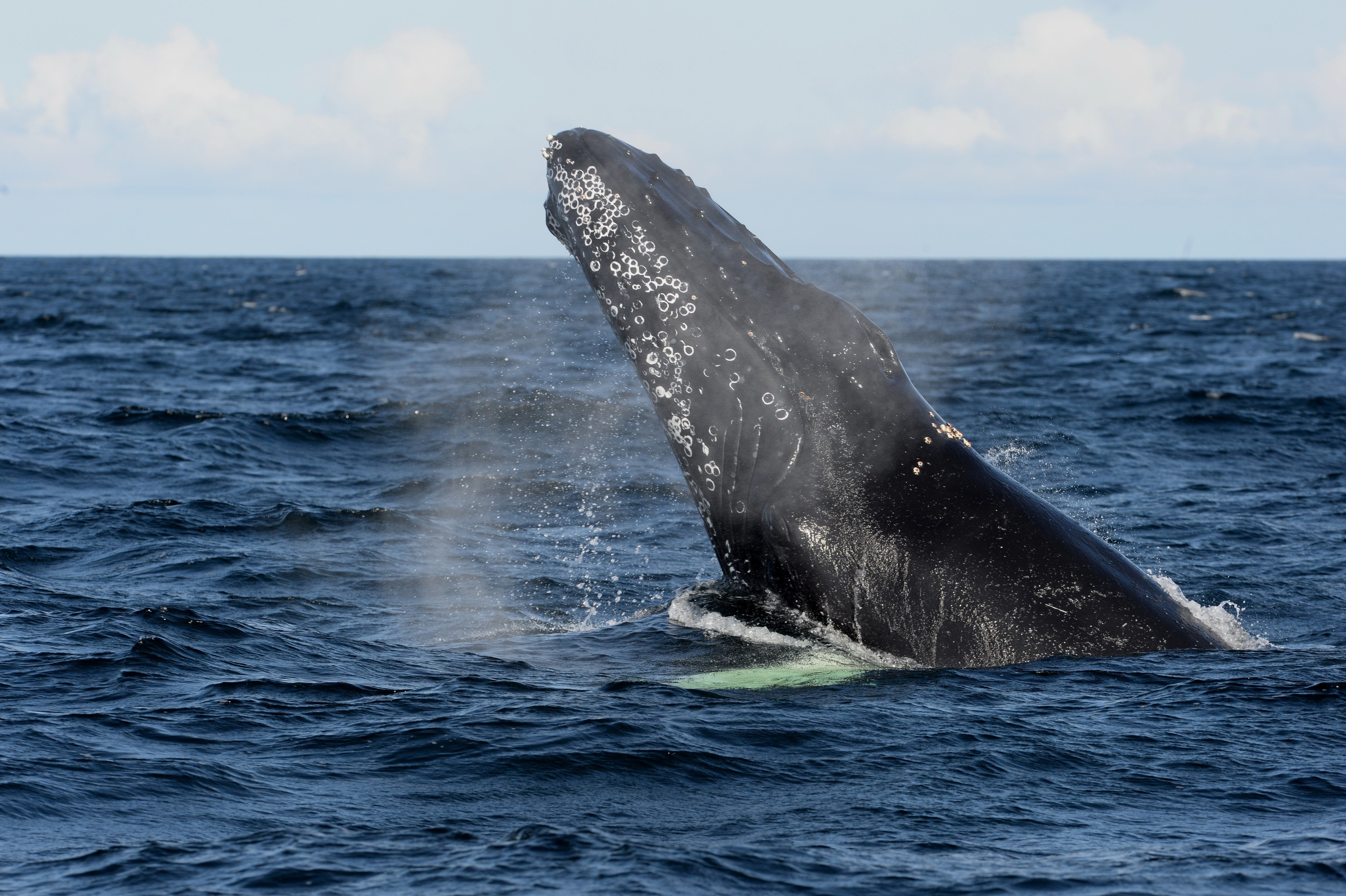
from the blowhole to the tip of the rostrum. Risso’s dolphins are often seen travelling and surfacing slowly, although they may be highly active often breaching clear of the water and slapping their heads, tails or sides on the surface. They sometimes surface with only their tail or head showing above the water. When travelling (at a speed of about 5 knots) they generally show the top of the head and dorsal fin as they blow. When diving, they may raise their tail flukes out of the water and descend vertically. Risso's may remain motionless on the surface of the water for several seconds after surfacing. They also spy hop (pic, left), revealing the whole head and body down to the flipper for 3 seconds or more, as if surveying their surroundings.
Natural History & Ecology: Risso’s dolphins reach a maximum length of 4 m and a weight of 500 kg. There is some evidence, from strandings records, that males are slightly longer than females. Males attain sexual maturity at a length of just under 300 cm, females slightly less, and at least 3 or 4 years of age. Knowledge of the reproduction and breeding of the Risso’s dolphins is still limited. Births may occur in winter, but calves may be born all year round. Off Britain, breeding is probably mainly between, although not restricted to, April and July. Gestation has been estimated to be 13 to 14 months. Hybridisation with bottlenose dolphins both in the wild and in captivity has been reported. The diet of Risso’s dolphin consists of mainly of cephalopods (especially squid), crustaceans and occasionally small fish. Vegetative matter has been found in the stomachs of stranded Risso’s dolphins, as with other cetaceans. It may be that weed is swallowed incidentally; alternatively it has been suggested that cetaceans, like some canids, seek herbal remedies when they are ill. Risso’s dolphins often swim in ‘echelon’ formation, lined up abreast at evenly spaced intervals in co-operative behaviour to improve the effectiveness of foraging and hunting. They are generally considered to forage in deep water, although in some places Risso's can be found feeding in shallow inshore waters.
|
Back to Fact Files
Back to Seismic Work
Back to Taxonomy
Back to Strandings Key
Our research programme would not be able continue if it were not for the
support
and encouragement given by our Supporters.
Please pay them a visit.
Return to the TOP of the Page
HOMEPAGE | ABOUT
US | RESEARCH | RESCUE
| EDUCATION | HOW
YOU CAN HELP | SPONSORS | LINKS
| SITEMAP